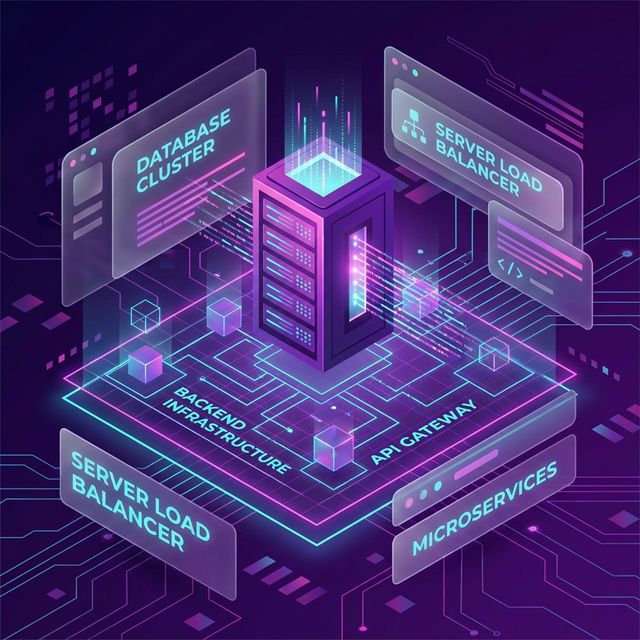
Scaling your Backend with Microservices
When applications grow beyond a certain size, managing them as a single monolithic codebase becomes incredibly difficult. The build times skyrocket, deployments become risky, and scaling specific features becomes impossible without scaling the entire server.
Enter Microservices
Microservices solve this problem by breaking down the application into dozens (or hundreds) of tiny, independent services that communicate with each other over HTTP.
Key Benefits
- Independent Scaling: If your checkout API gets hammered with traffic, you only need to spin up more checkout servers, rather than entire copies of the monolithic app.
- Language Agnostic: Your authentication service can be written in Go for speed, while your data analytics service is written in Python for data science libraries.
- Resilience: If one microservice goes down, it doesn’t bring down the entire application.
“A microservice is a small, autonomous service that works together with other small services.”
The Challenges
However, distributed systems natively come with incredible complexities regarding networking, security, and data consistency.